


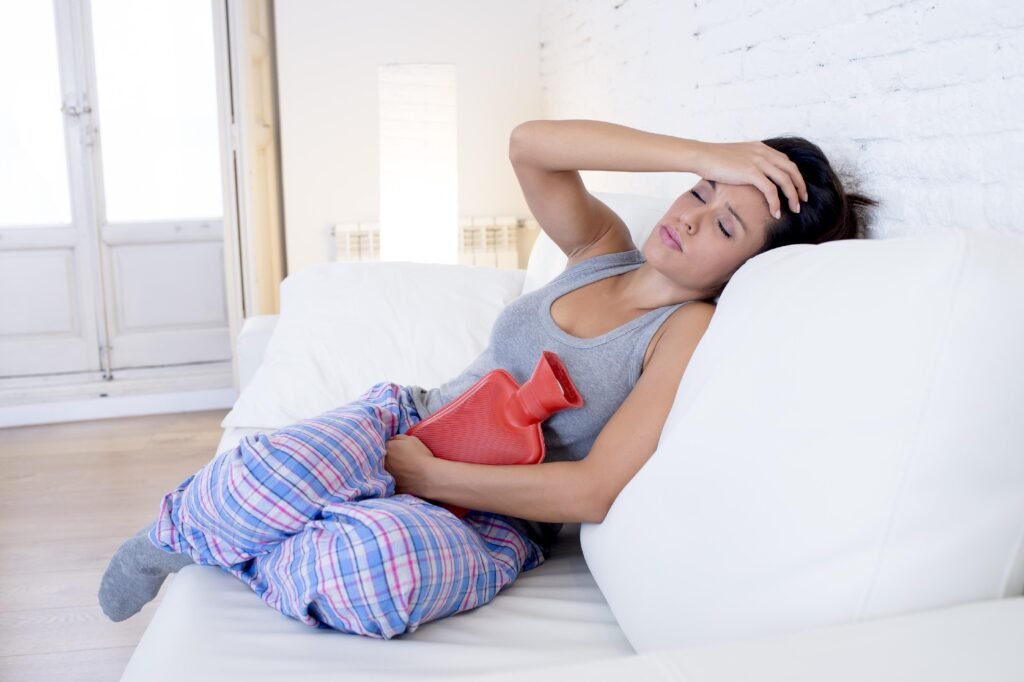
1. Menstrual Pain Caused by Reproductive Conditions (Secondary Dysmenorrhoea)
If your cramps continue even after your period, it might be secondary dysmenorrhea, which is menstrual pain linked to another reproductive health issue such as endometriosis, fibroids or pelvic inflammatory disease.
Unlike regular period cramps, these:
- Begin just before your period
- Get more intense during your period
- Continue after your period ends
This type of pain often appears later in life and can gradually worsen. If you experience severe or prolonged cramps, it’s best to consult your GP or gynaecologist for evaluation and proper treatment.
2. Implantation Cramping
If you’re trying to conceive and experience cramps after your period, it could be due to implantation. This occurs when a fertilised egg attaches itself to the uterus, typically 6–12 days after ovulation.
Implantation cramps are usually mild and short-lived and may come with light spotting. If you notice this around the time your next period is due, it might be an early sign of pregnancy. Taking a pregnancy test a few days later can help confirm it.
3. Ovulation Cramping (Mittelschmerz)
Some women experience mild abdominal cramps midway through their cycle, this is called ovulation pain or Mittelschmerz. It happens when your ovary releases an egg, usually about 14 days before your next period.
This pain can last anywhere from a few minutes to two days and may occur on one side of your lower abdomen. It’s a normal and harmless sign that your body is ovulating.
When Should You See a Doctor?
Occasional cramps after your period are often nothing to worry about, but if you notice severe pain, heavy bleeding or pain lasting more than a few days, you should speak to a medical professional. Persistent discomfort could signal an underlying condition that needs treatment.
Self-Care Tips to Ease Post-Period Cramps
Here are a few simple ways to relieve discomfort naturally:
- Use a heating pad on your lower abdomen
- Stay hydrated and reduce caffeine intake.
- Practise gentle yoga or stretching.
- Take over-the-counter pain relief if needed.
- Get enough rest and manage stress levels.
FAQ Section
1. Is it normal to have cramps after your period ends?
Yes, mild cramps after your period can be normal, especially during ovulation or hormonal changes. However, if the pain is severe or persistent, consult your doctor.
2. Can cramps after a period mean pregnancy?
Yes, if you’re trying to conceive, cramps could be due to implantation. Take a pregnancy test a few days later for confirmation.
3. What’s the difference between period cramps and ovulation cramps?
Period cramps usually happen before or during your period, while ovulation cramps occur midway through your cycle, around two weeks before your next period.
4. Should I worry if cramps happen every month after my period?
If it’s consistent and painful, it might indicate a reproductive health condition like endometriosis. Seek medical advice to rule out any concerns.
5. How can I manage cramps naturally?
Try heat therapy, gentle exercise, hydration and a healthy diet. Avoid excessive caffeine and processed foods to reduce inflammation.