


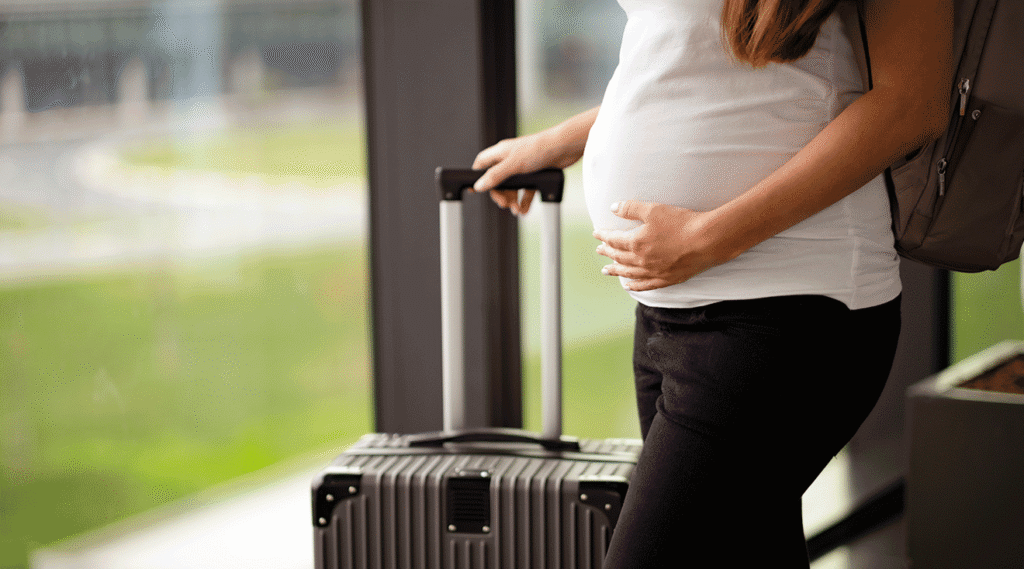
Careful planning is essential, consult your midwife or doctor before making arrangements, choose the right mode of transport and prioritise your comfort and safety throughout your trip.
When is the Best Time to Travel During Pregnancy?
First Trimester (Weeks 1–13): Morning sickness, fatigue and the higher risk of miscarriage can make travelling less comfortable. If travel is unavoidable, plan plenty of rest stops and keep hydrated
Second Trimester (Weeks 14–28): This is generally considered the most comfortable and safest time to travel. Nausea usually subsides and the baby bump is not yet too large.
Third Trimester (Weeks 29–40): Travel is possible but less comfortable. Airlines often restrict flying after 28–32 weeks and long journeys can increase discomfort. Always check airline policies and consult your doctor beforehand.
Pro Tip: Always seek medical advice before booking a trip if you have conditions like gestational diabetes, preeclampsia or a high-risk pregnancy.
Choosing the Right Mode of Transport
Flying While Pregnant
- Safe for most women up to 36 weeks (but check airline rules).
- Opt for an aisle seat for toilet access and leg movement.
- Wear compression socks to reduce swelling and improve circulation.
- Stay hydrated, cabin air can cause dehydration.
- Walk around every hour to prevent blood clots.
Travelling by Car
- Take breaks every 1–2 hours to stretch your legs.
- Wear your seatbelt correctly: lap belt below the bump across hips, shoulder belt between breasts.
- Carry a small pillow for back support.
- Avoid long trips alone, travel with a companion when possible.
Train or Bus Travel
- Choose an aisle seat for easy mobility.
- Pack snacks and water to maintain energy.
- Be extra careful when using onboard toilets to avoid slips and falls.
Pregnancy Travel Essentials: What to Pack
- Prenatal vitamins & medication – Never skip them
- Medical records & pregnancy notes – Essential for emergencies.
- Loose, breathable clothing – Keeps circulation flowing.
- Compression socks – Prevent swelling.
- Snacks & a water bottle – Stay energised and hydrated.
- Travel pillow or cushion – Extra support for long journeys.
💡 Pro Tip: If travelling abroad, check nearby maternity care facilities and ensure hospitals are accessible in case of emergencies.
Staying Safe and Comfortable While Travelling Pregnant
- Stay hydrated – Prevents dizziness and blood clots.
- Move regularly – Stretch legs or walk when possible.
- Avoid strenuous activities – Opt for light walking or swimming.
- Watch food safety – Avoid unpasteurised dairy, raw seafood and unhygienic street food.
- Know emergency contacts – Identify the nearest hospital at your destination.
Final Thoughts: Can You Travel While Pregnant?
Absolutely! With the right preparation, travelling during pregnancy can be both safe and enjoyable. Choosing the right time, the right mode of transport and packing wisely ensures peace of mind.
Pro Tip: Always listen to your body. Rest when needed, and never ignore discomfort. Your health and safety come first.
FAQs
Is it safe to fly when pregnant?
Yes, flying is usually safe until around 36 weeks, though some airlines restrict travel after 28–32 weeks. Always confirm with your airline.
When is the best time to travel during pregnancy?
The second trimester is considered the most comfortable and safest period for travel.
What should I avoid while travelling pregnant?
Avoid heavy lifting, strenuous activities and unhygienic food that could cause illness
Do I need travel insurance during pregnancy?
Yes, always get travel insurance that covers pregnancy-related emergencies.