


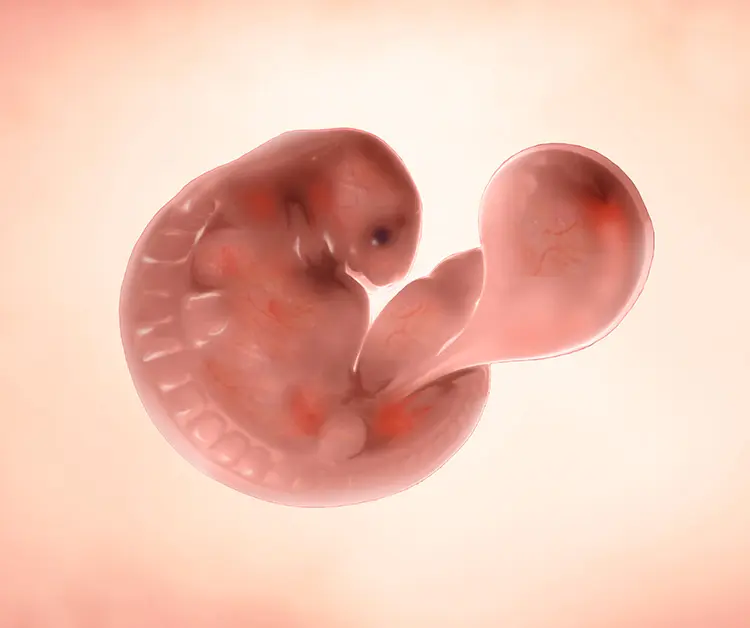
How Big Is My Baby at 5 Weeks?
At 5 weeks pregnant, your baby (embryo) is about the size of an orange seed. Although tiny, huge developments are happening. This week marks the beginning of organ formation, including the digestive, circulatory and nervous systems.
A tube-like structure is forming into your baby’s heart, while the neural tube which will develop into the brain and spinal cord is starting to close. These early steps are crucial for your baby’s growth and development.
hCG and Pregnancy Tests at 5 Weeks
By this stage, most women have missed their period. Levels of hCG (human chorionic gonadotropin) are now high enough to be detected by a home pregnancy test. If you’re seeing a positive result, congratulations you’re expecting!
Frequent urination, fatigue and bloating are also common this week as your body adjusts to rising hormone levels.
Emotional Changes at 5 Weeks Pregnant
Finding out you’re pregnant can bring mixed emotions excitement, joy, anxiety or even fear. Mood swings are normal and caused by hormonal changes. Remember: it’s perfectly natural to feel overwhelmed. Take deep breaths, you’ve got this!
Early Signs of Pregnancy at 5 Weeks
Some common 5 weeks pregnant symptoms include:
- Fatigue and low energy
- Tender or swollen breasts
- Mild nausea or food aversions
- Bloating or digestive discomfort
- More frequent trips to the bathroom
Pregnancy Hormones at Work
At this stage, your body is busy producing vital hormones:
- Oestrogen – Helps regulate progesterone and hCG levels.
- Progesterone – Supports placenta function and breast tissue growth.
- hCG – Maintains early pregnancy until the placenta takes over at around 10 weeks
These hormones explain many of the changes and symptoms you’ll notice in early pregnancy.
Should You Tell People You’re Pregnant at 5 Weeks?
There’s no right or wrong time to share the news. Some parents announce early, while others wait until the end of the first trimester, when the risk of miscarriage decreases. Remember, it’s entirely your choice.
Tips for 5 Weeks Pregnant
Check Your hCG Levels (If Needed)
Your doctor may recommend a blood test to confirm pregnancy and monitor hCG. What’s important isn’t the exact number but whether the levels are rising as expected.
IVF and Due Date Calculation
If you conceived through IVF, your due date is based on embryo transfer:
- Day 3 transfer – add 263 days
- Day 5 transfer – add 261 days
An IVF due date calculator can also help.
Exercise Precautions
Moderate activity is safe, but don’t overexert yourself. Aim for light to moderate workouts, such as walking, swimming or prenatal yoga. Always consult your healthcare provider before starting new routines.
Managing Bloating
Feeling gassy? Opt for tummy-friendly foods:
- Swap broccoli for mangoes
- Choose strawberries instead of cabbage
Avoid fizzy drinks and drink plenty of water to ease bloating.
Healthy Fats for Baby’s Brain Development
Omega-3s are vital for your baby’s growth. Sources include:
- Safe pregnancy fish like trout and salmon
- Fortified foods (milk, yoghurt, eggs)
- Prenatal supplements
Could It Be Twins?
Some signs that you may be pregnant with twins include:
- Stronger morning sickness
- Higher fatigue levels
- Faster weight gain in early pregnancy
Only an ultrasound can confirm multiples, typically between 6–9 weeks.
FAQs About Being 5 Weeks Pregnant
1. Is it normal not to feel pregnant at 5 weeks?
Yes, some women experience few or no symptoms early on. Every pregnancy is different
2. Can you miscarry at 5 weeks and not know?
Yes, very early miscarriages can feel like a heavy period. Always consult your doctor if you’re concerned.
3. Can you see a heartbeat at 5 weeks?
Not usually. Heart activity is typically detected around 6–7 weeks via ultrasound.
4. What should I avoid at 5 weeks pregnant?
Avoid alcohol, smoking, high-mercury fish, unpasteurised dairy and excessive caffeine.
5. Can I exercise at 5 weeks pregnant?
Yes, but keep it moderate. Walking, swimming and prenatal yoga are safe options.